Home

Who's American Dream Is It?

Open the reading →
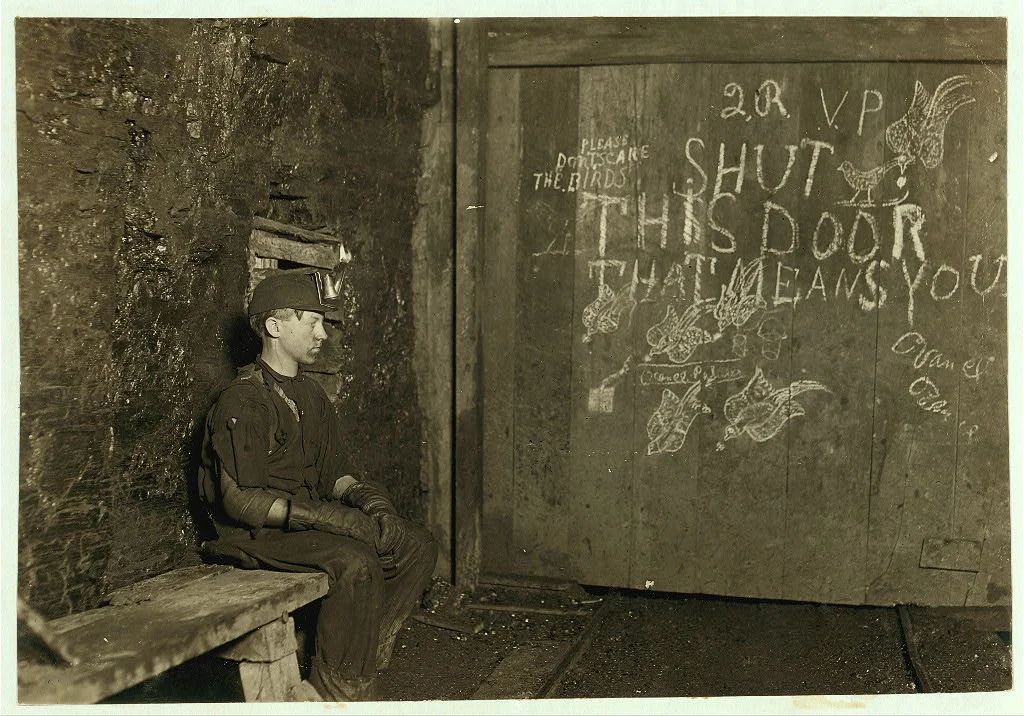
Vance sits beside a mine door with a lamp on his cap.
Vance, age 15, West VirginiaHe opened the door for coal cars. Hine recorded his pay as 75¢ for ten hours. September 1908. Lewis Hine, Library of Congress ↗

You Need Two Pages... in your notebook

Title it: Labor Unions: Why Strike? Was it Worth It?

Use one side of the notebook to take and organize your notes from this experience. The other will be used for tomorrow's lecture notes.

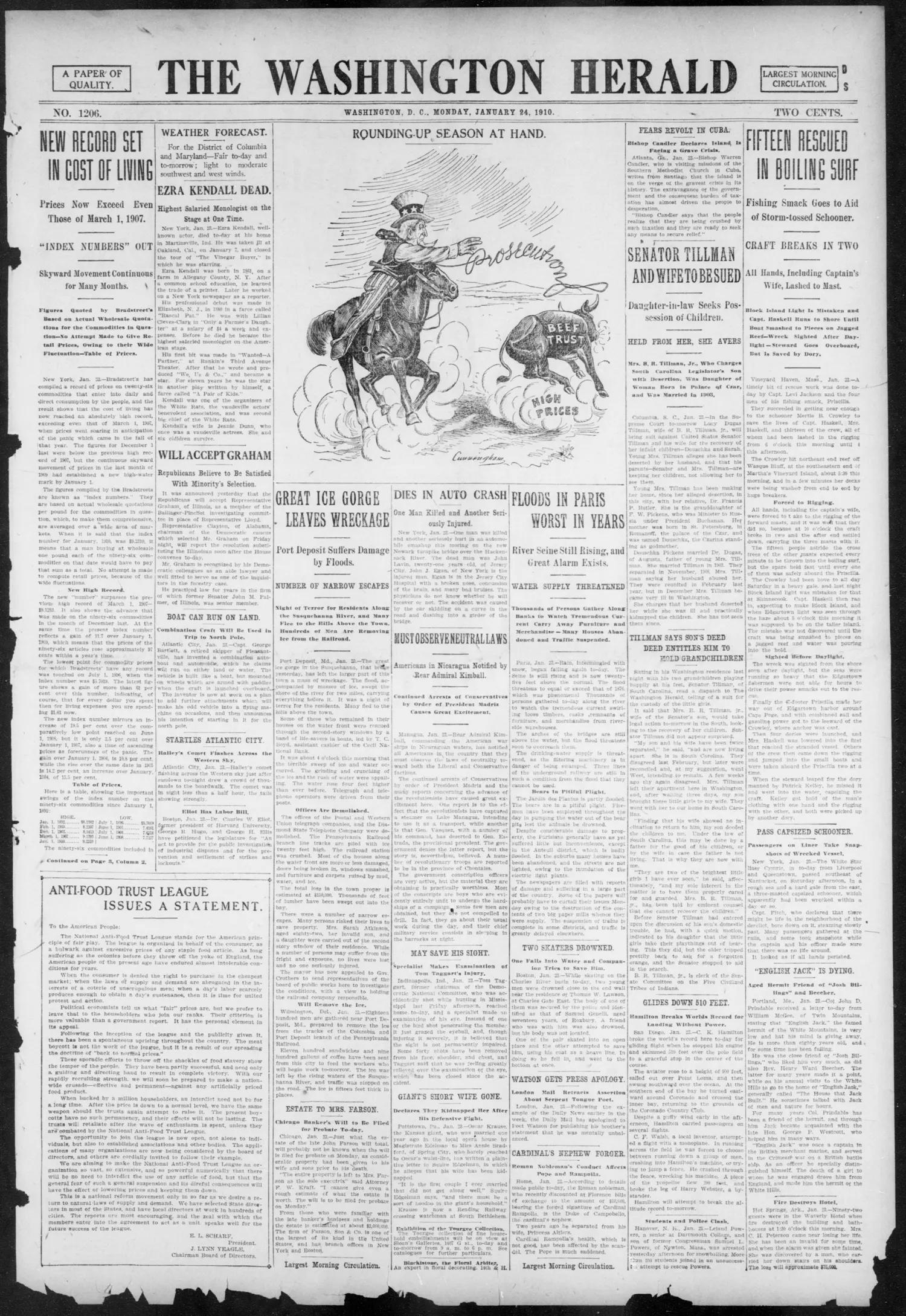
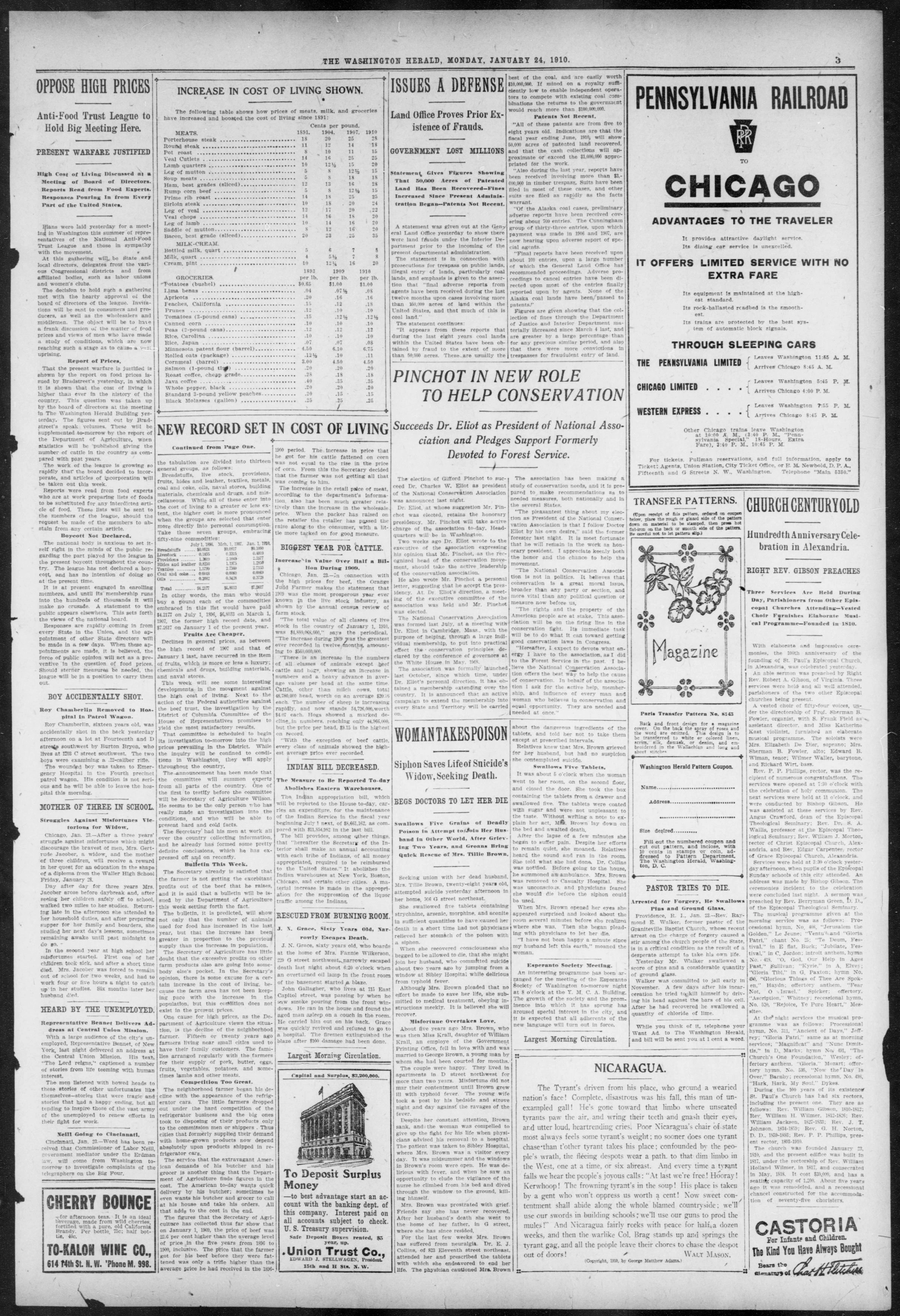
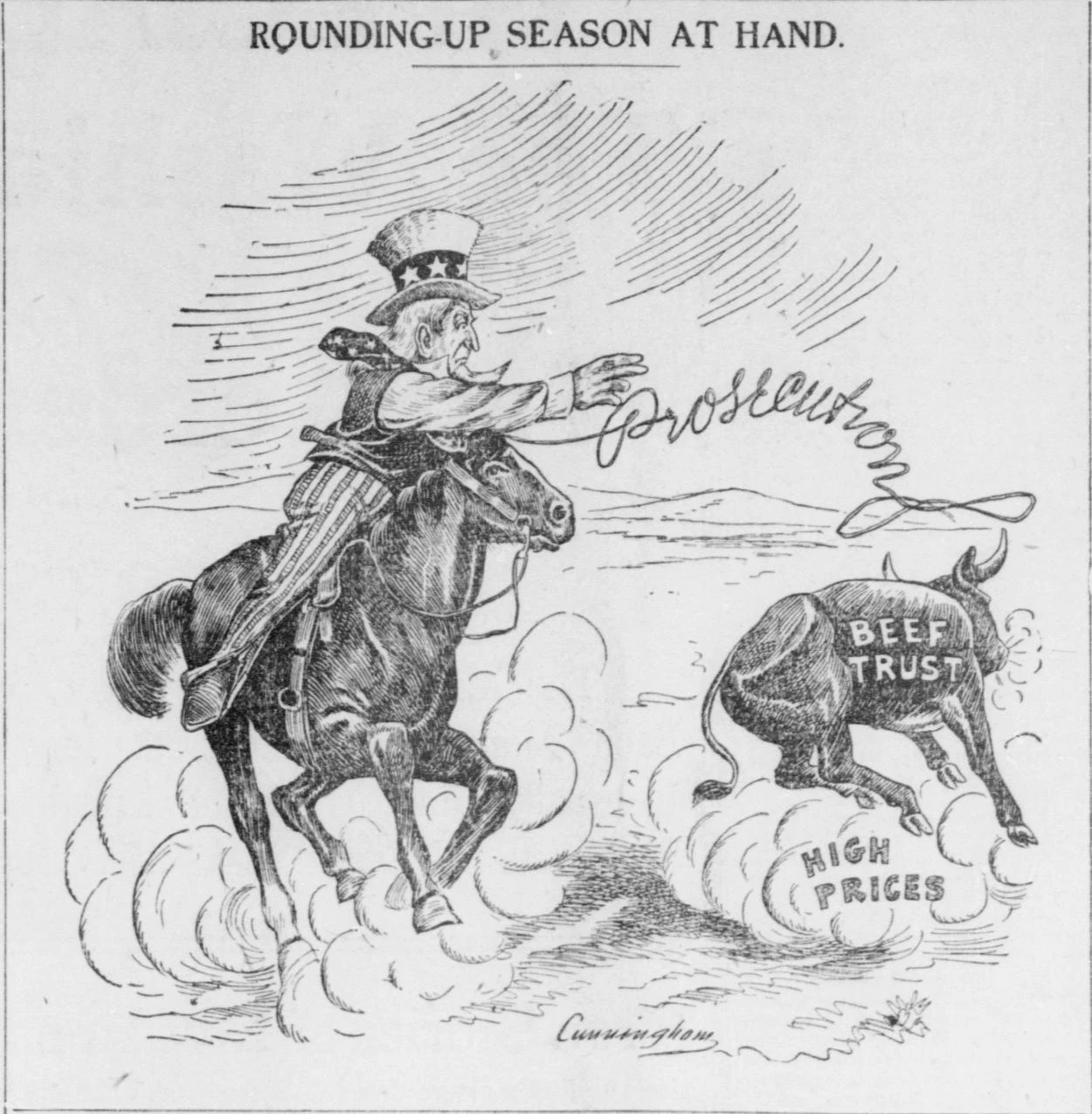
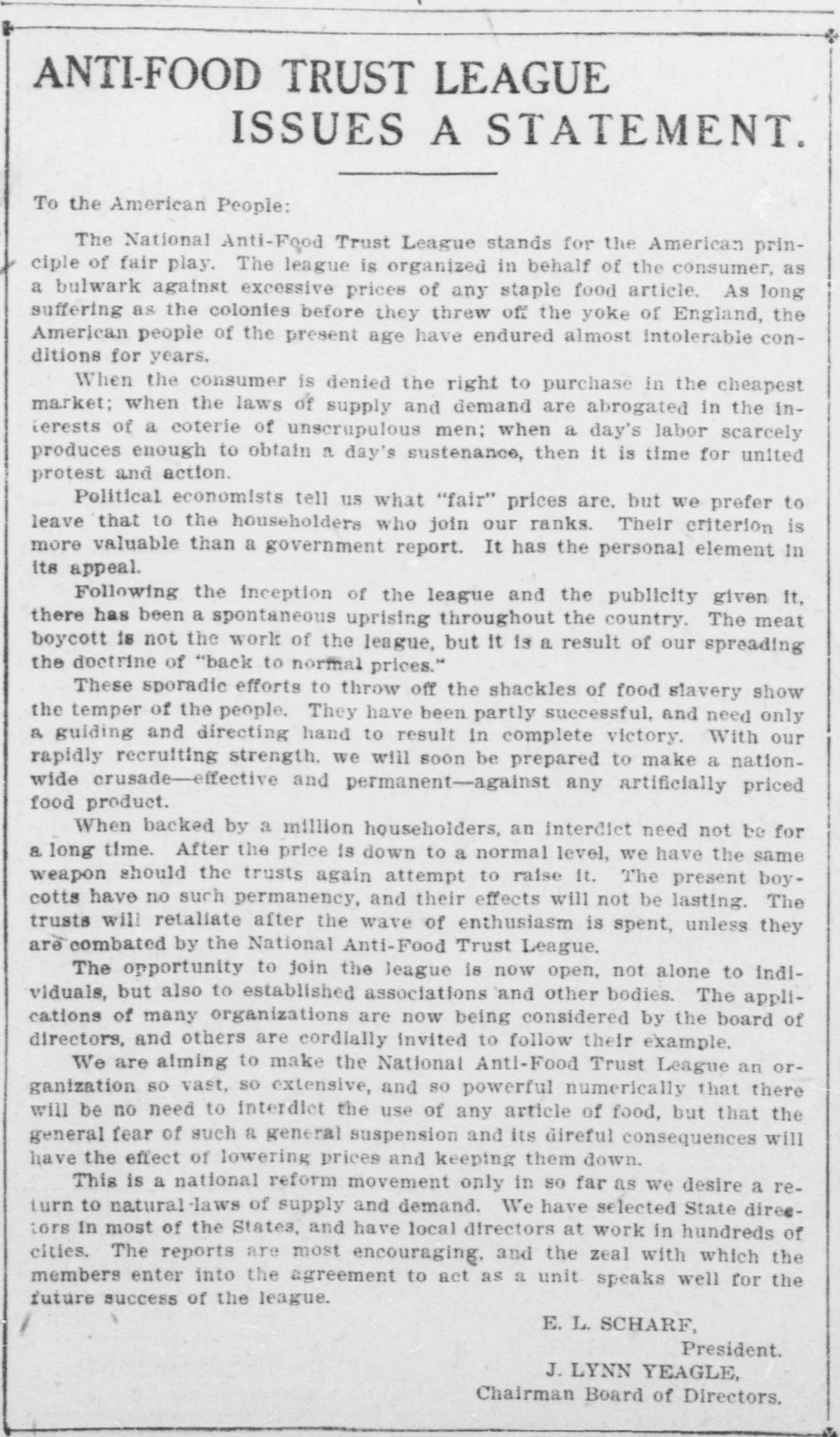
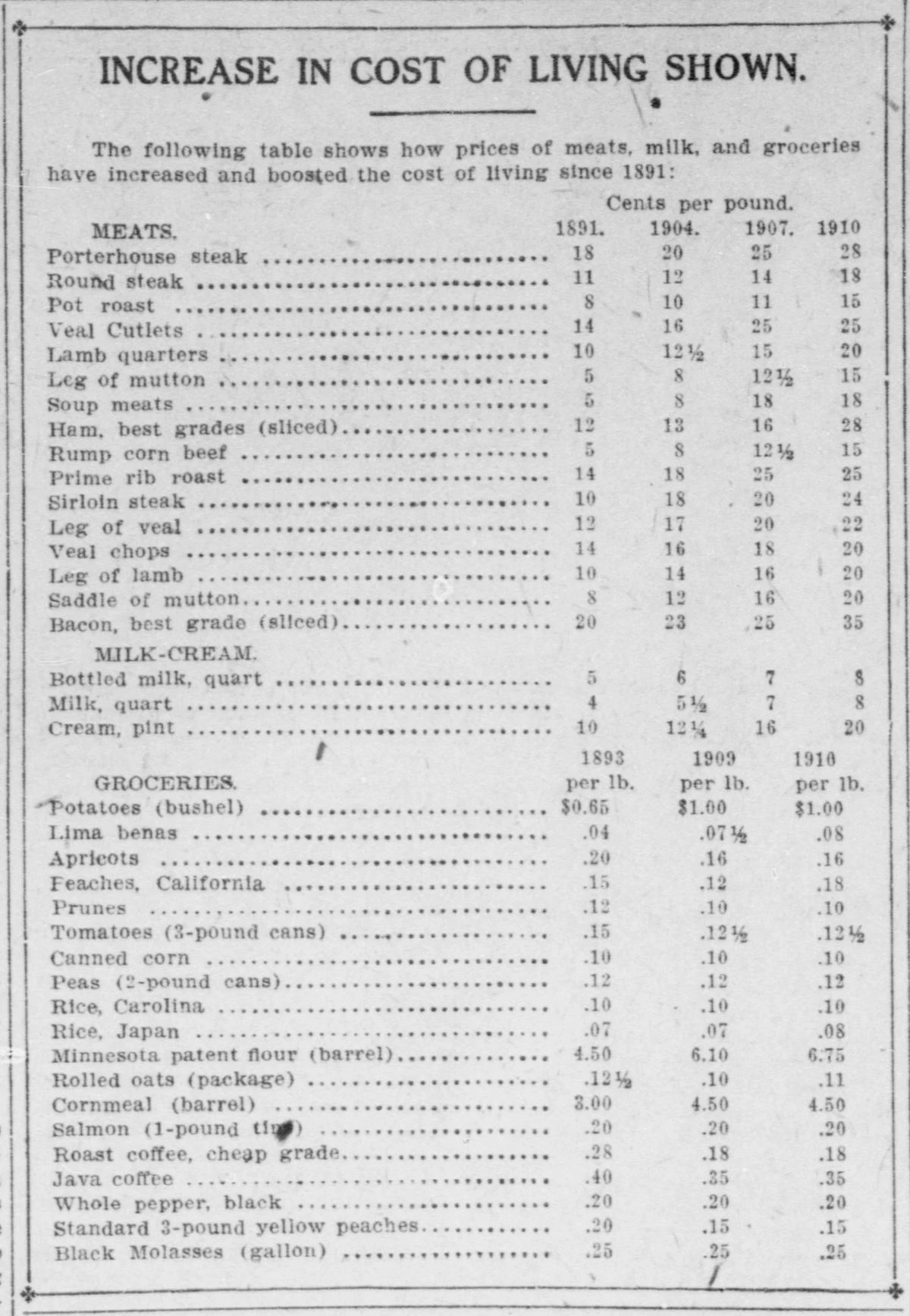
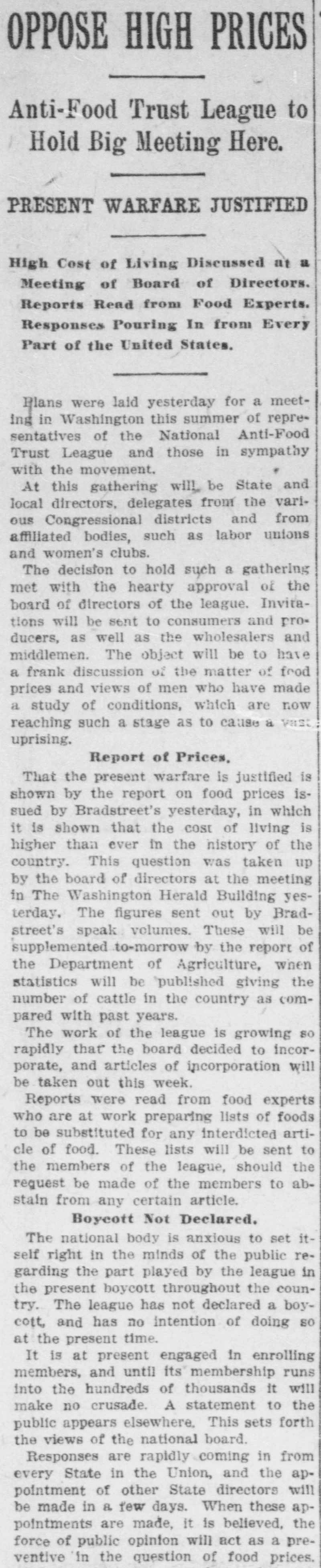
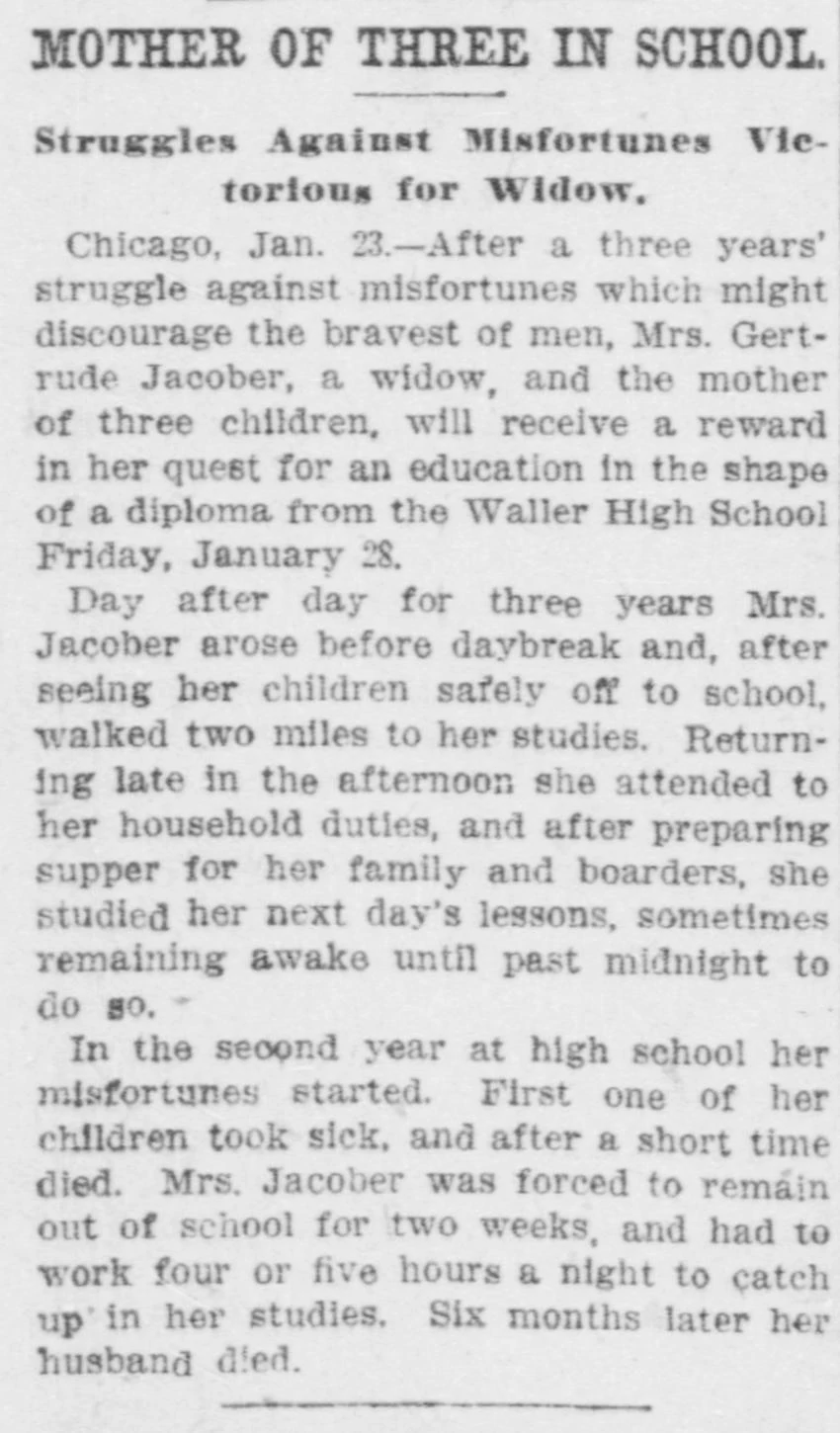
The Washington Herald, January 24, 1910

Click a marked article to read it.

The Washington Herald, January 24, 1910, front page.

Luck and Pluck

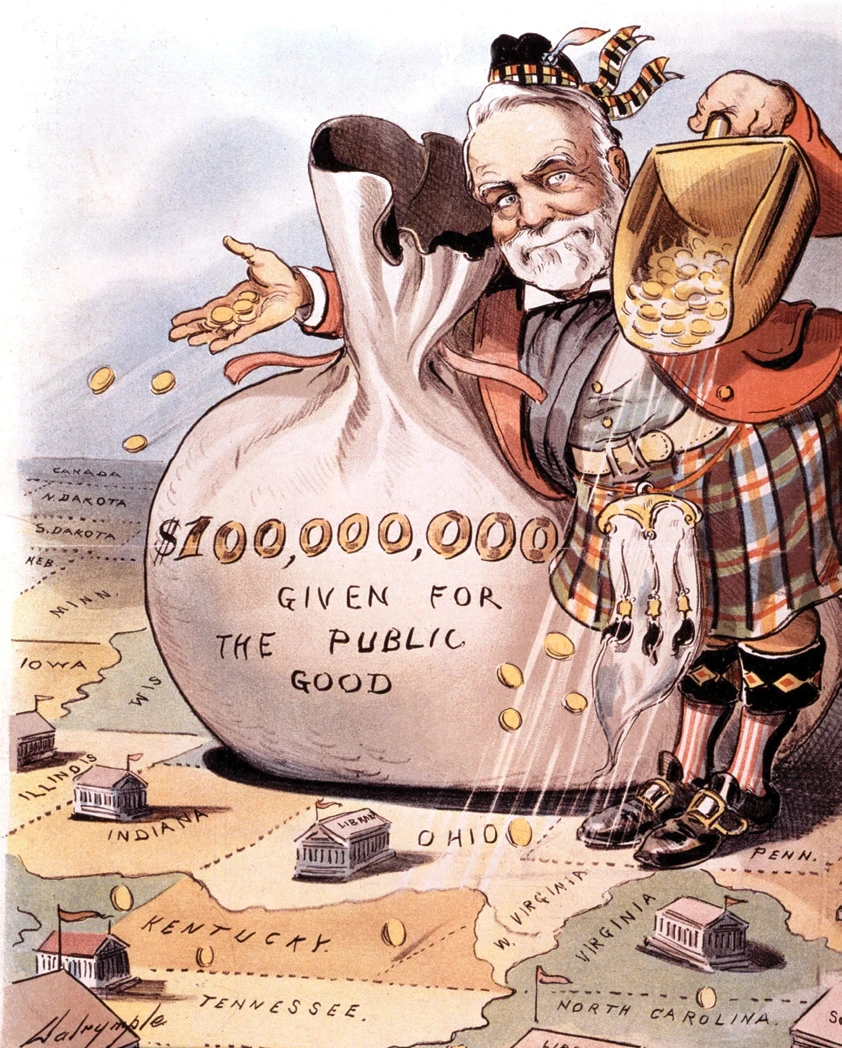
Carnegie pours coins over a map dotted with libraries beside a sack labeled $100,000,000 given for the public good.
Louis Dalrymple, 1903. Carnegie showers the United States with wealth “for the public good.” Source
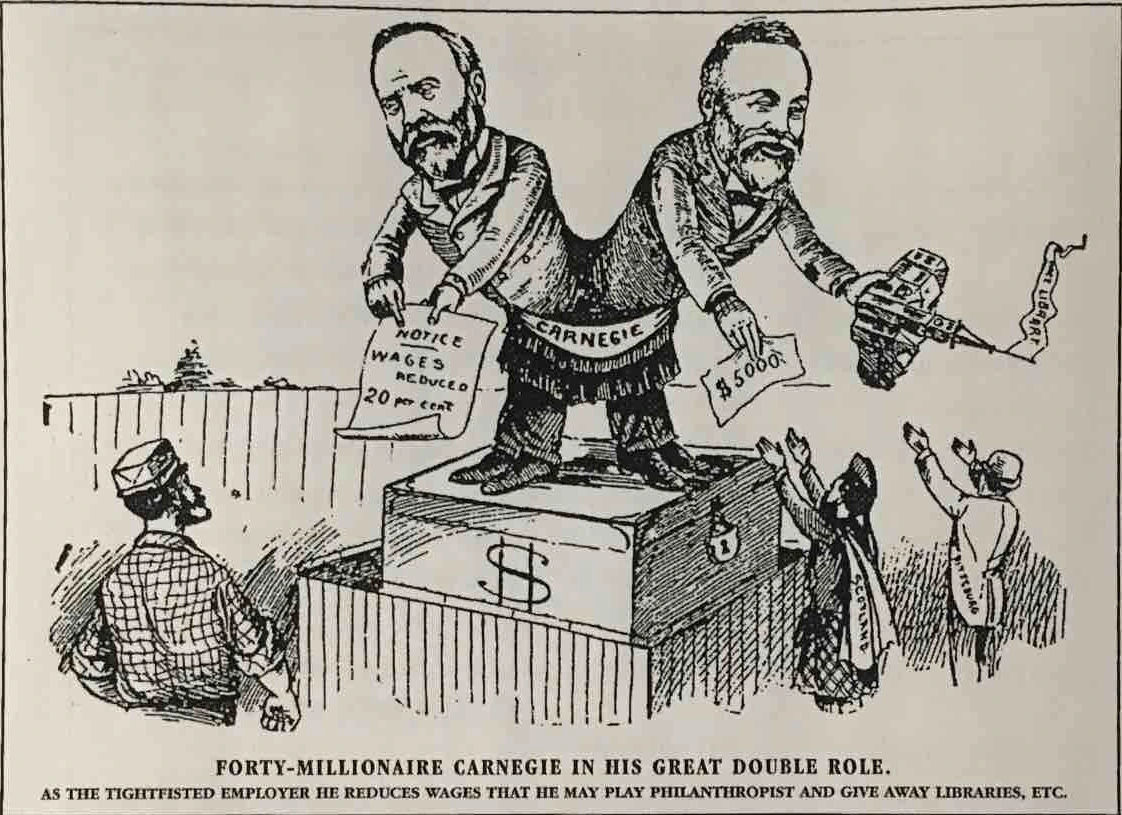
A two-faced Carnegie shows different faces toward philanthropy and workers.
“Forty-Millionaire Carnegie in His Great Double Role,” The Saturday Globe, Utica, New York, July 9, 1892. Source

What should a fortune do?

In the Gospel of Wealth, Carnegie argued that wealthy people had a responsibility to use their fortunes for the public good. As your textbook reading explained, philanthropy funded libraries, universities and museums. Supporters believed these institutions gave people opportunities to improve their lives. That helped support the view of Carnegie as a captain of industry.

The cartoons ask you to judge both how a fortune was made and how it was given away. A library might offer a worker books and a place to study. The same worker still needed enough money, time and energy to use it. A donation did not give workers a say in their wages or working conditions.

  1. Compare the two cartoons. Which details support Carnegie’s claim that his fortune benefited the public? Which details challenge his treatment of workers?
  2. Paul and Everlena Jefferson have skills and their own businesses. What opportunity could a library provide their family? What barrier in their household story would a library donation leave in place?

Who deserved to succeed?

The textbook section explains that Social Darwinists applied ideas about biological competition to human society. They treated wealth as evidence of a person’s inherent worth and poverty as evidence of unfitness. Supporters of laissez-faire used that reasoning to argue that government should stay out of business. Some also argued that public aid to the poor interfered with competition and weakened society.

That argument gave inequality a justification. A wealthy person could be called naturally fit because they had succeeded. A poor person could be called unfit because they remained poor. The textbook explains that this reasoning also fueled discrimination against minority groups.

A circular argument

Discrimination restricted someone’s opportunities. Those restrictions made it harder to earn or save money. Their poverty was then presented as proof that the discrimination was justified. The argument used the result of unequal treatment to defend more unequal treatment.

Paul and Everlena Jefferson invested in their skills and businesses while racial discrimination restricted their opportunities. Everlena also faced discrimination as a woman. Calling their obstacles a failure of effort would leave out both barriers.

Quan Win worked for railroad wages while anti-Chinese discrimination and exclusion restricted his choices. His income alone could not show how hard he worked or what opportunities had been closed to him.

George Karras worked in a slaughterhouse and supported four children after his wife died. His family responsibilities and treatment as a Greek immigrant shaped what his wages could accomplish.

  1. Choose one household. How could a Social Darwinist use its financial position as evidence of “fitness”? What detail from the household’s actual circumstances challenges that explanation?
  2. Why might someone who benefited from the existing system find Social Darwinism convincing? How could that belief affect their response to a request for higher wages or government regulation?

Reading adapted from the class textbook excerpt, The Pros and Cons of Big Business, section 2.2, pp. 110–112.

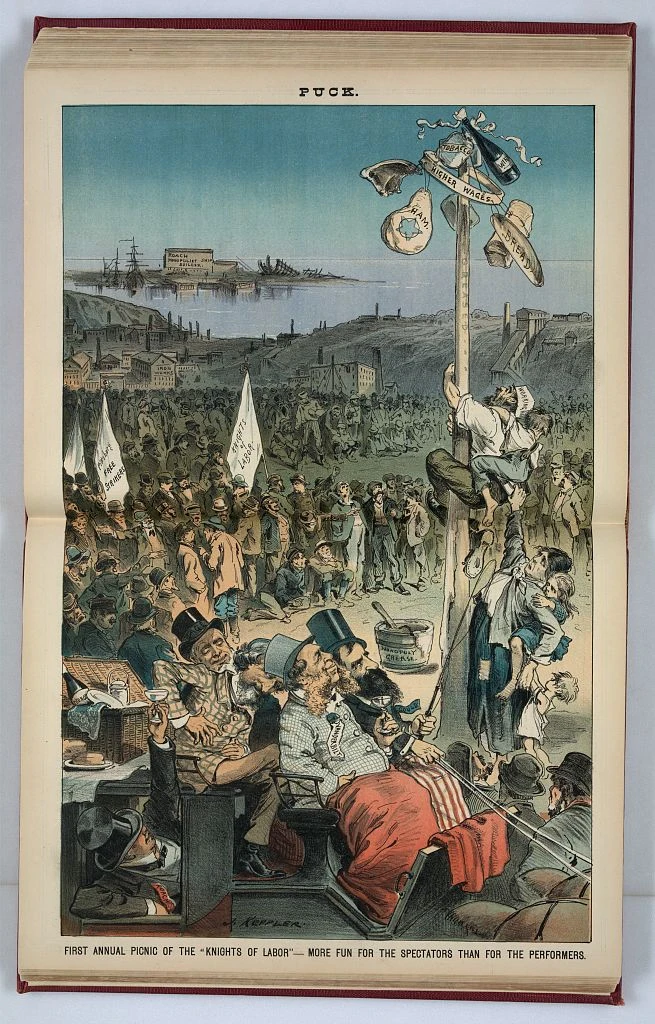
A workingman carrying his family climbs a pole coated with Monopoly Grease toward higher wages.
Joseph Keppler, First Annual Picnic of the Knights of Labor, Puck, June 21, 1882. Library of Congress

Who greased the pole?

  1. Find “Monopoly Grease.” What makes the workingman’s climb difficult, and who benefits from the way the climb is arranged?
  2. How might a Social Darwinist explain the worker’s difficulty? How does the cartoonist challenge that explanation?
  3. Would a gift from one of the men watching change the conditions of the climb? What could the workers ask to change together?

Limits of philanthropy: ________________

Social Darwinism during this time period is best defined as____________ even though at the time someone might have thought it meant: _________________

Sadie’s Hands

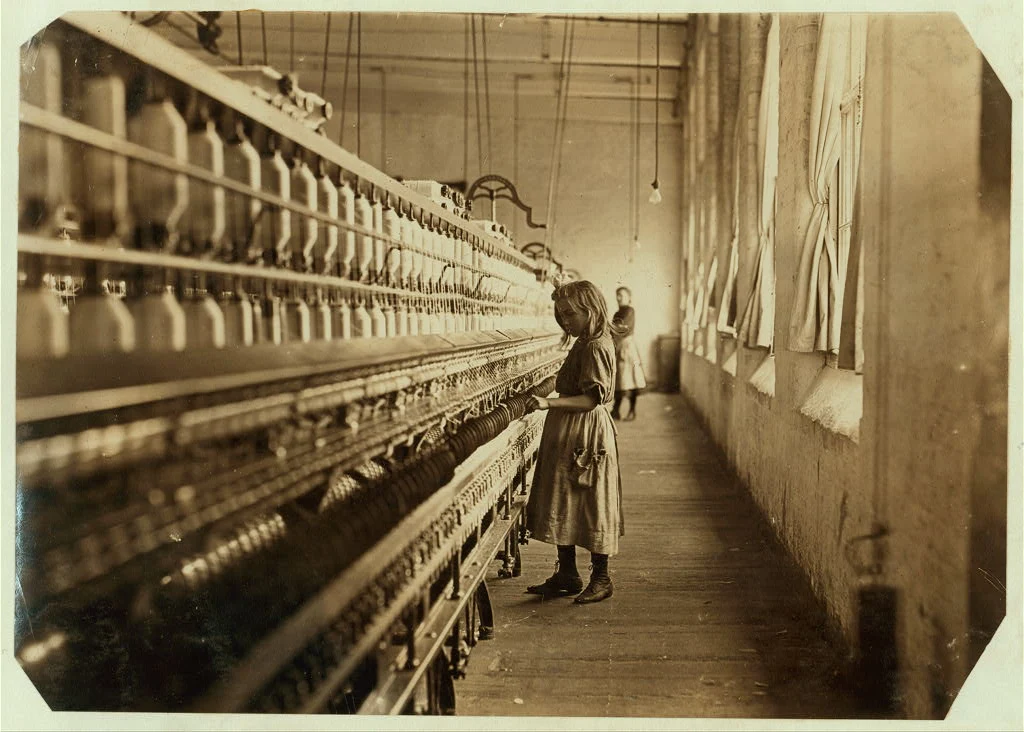
Sadie Pfeifer, standing nearly eye-level with the upper part of a spinning frame, reaches toward its threads.
Lewis Hine photographed Sadie Pfeifer in a South Carolina cotton mill in 1908. He recorded her height as 48 inches and said she had worked there half a year. Original photograph and field caption ↗
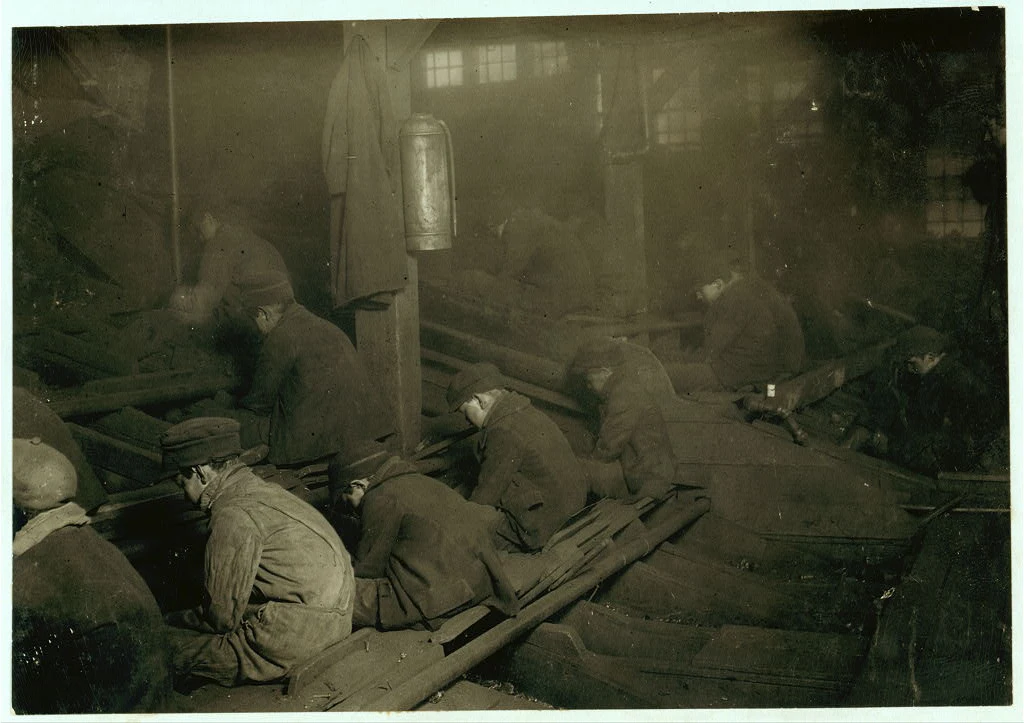
Boys sit in rows sorting coal inside the Ewen Breaker.
Hine described dust so thick he sometimes lost sight of the boys. Ewen Breaker, South Pittston, Pennsylvania, January 1911. Read his field caption ↗
  1. Compare the work around Sadie with the coal breakers’ work. What hazards could an employer remove? What would a worker have to risk to demand the change?
  2. Tommy’s wages helped Bessie’s family pay its bills. What would happen to their budget if he stopped working? What could happen to his future if he stayed?

Triangle Shirtwaist, March 25, 1911

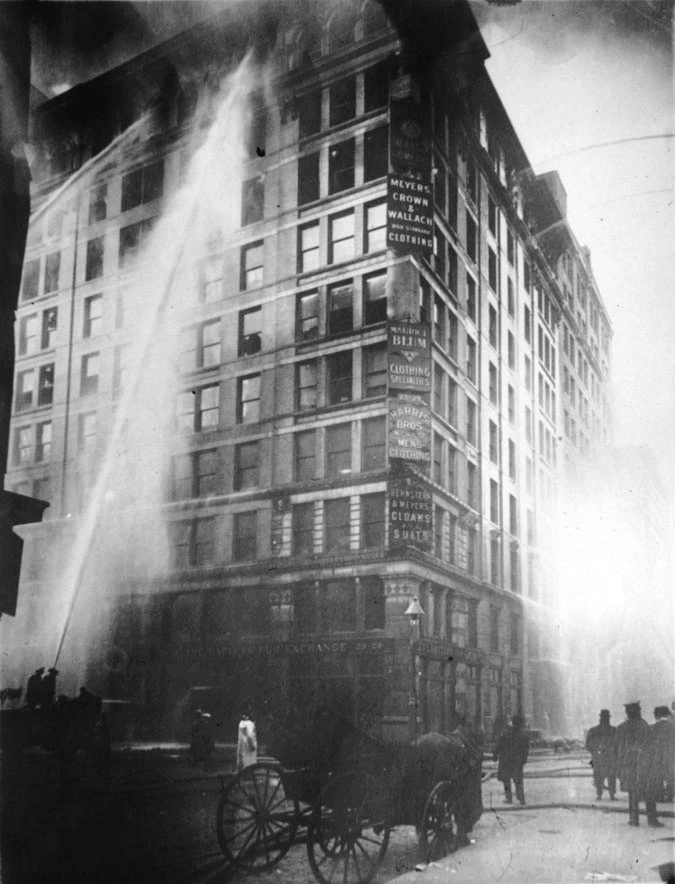
Fire swept through the garment factory’s upper floors in New York. The final death toll was 146. Read what a newspaper told its readers the next morning, then consider what each person in your notebook would want to happen next.

Smoke billows from the Triangle building as fire crews direct hoses toward the upper floors.
Triangle Shirtwaist factory fire, March 25, 1911. Published in the New York World, March 26, 1911. Cornell Kheel Center image, via Wikimedia Commons. Image source

“The strong hand of the working class”

Union organizer Rose Schneiderman spoke at a memorial meeting at the Metropolitan Opera House on April 2, 1911. Her audience included people prepared to raise money for the victims’ families. She asked them to consider what charity had accomplished before the fire.

I would be a traitor to these poor burned bodies if I came here to talk good fellowship. We have tried you good people of the public and we have found you wanting.

The old Inquisition had its rack and its thumbscrews and its instruments of torture with iron teeth. We know what these things are today; the iron teeth are our necessities, the thumbscrews are the high-powered and swift machinery close to which we must work, and the rack is here in the firetrap structures that will destroy us the minute they catch on fire.

This is not the first time girls have been burned alive in the city. Every week I must learn of the untimely death of one of my sister workers. Every year thousands of us are maimed. The life of men and women is so cheap and property is so sacred. There are so many of us for one job it matters little if 146 of us are burned to death.

We have tried you citizens; we are trying you now, and you have a couple of dollars for the sorrowing mothers, brothers and sisters by way of a charity gift. But every time the workers come out in the only way they know to protest against conditions which are unbearable the strong hand of the law is allowed to press down heavily upon us.

Public officials have only words of warning to us--warning that we must be intensely peaceable, and they have the workhouse just back of all their warnings. The strong hand of the law beats us back, when we rise, into the conditions that make life unbearable.

I can't talk fellowship to you who are gathered here. Too much blood has been spilled. I know from my experience it is up to the working people to save themselves. The only way they can save themselves is by a strong working-class movement.

Full speech · Cornell University Triangle Fire archive

  1. What does Schneiderman mean when she says she has tried the public with “the good people” and found them wanting?
  2. Why does she place her hope in workers organizing themselves? How might a factory owner or a middle-class woman in Dayton respond?

Point of view of the Triangle Shirt Waist Fire (Worker, Factory owner, Middle class woman reading the article in Dayton)

Who Cares

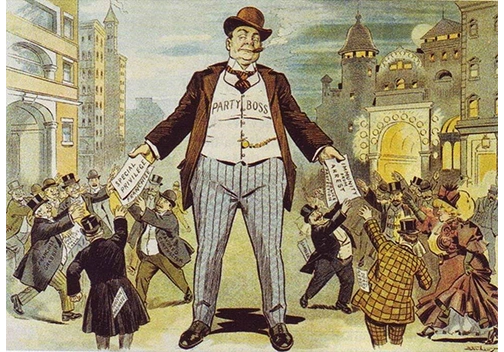
A Party Boss offers Special Privilege and Immunity from Arrest to people gathered around him.
How Is It In Your City? · Puck. Image reproduced by AEI

Political machines and city government

As cities grew, political machines organized voters and controlled many local governments. A city boss directed the organization. Ward bosses and district workers built support in individual neighborhoods. They helped residents find jobs, obtain services and deal with officials. In return, they expected votes and campaign work for the machine’s candidates.

This system gave immigrants and working families someone to turn to when city government moved slowly. But public jobs and contracts could reward political loyalty instead of ability. A contractor might charge the city too much and return part of the payment to the boss. Such arrangements enriched insiders at taxpayers’ expense. Businesses might also pay for special treatment or protection from law enforcement.

After tenement fires, neighborhood politicians could quickly arrange food, clothes and shelter. Aid created gratitude and political support. One Tammany politician’s account contrasted this quick response with charities that investigated applicants before helping. He also described buying land after learning of a planned city park, then selling it to the city at a profit. Public information and public needs became opportunities for private gain.

Sources · OpenStax, U.S. History, “Machine Politics” · Plunkitt of Tammany Hall, chapters 1 and 6

Lester Backus had a steady police paycheck, but a political connection could affect his assignments and chances to get ahead. Samuel Johnston had professional skills and his own architectural practice. In the simulation, taking the city contract was what allowed him to get ahead. Both men needed more than hard work. A person with influence over public jobs or contracts could open a door—and expect something in return.

  1. Use the cartoon and the reading. How could a party boss provide “Special Privilege” or “Immunity from Arrest”? What would each favor cost the public?
  2. What would you need to know before deciding whether Samuel’s city contract was fair? Compare an open competition for the work with a contract awarded in exchange for a political favor.
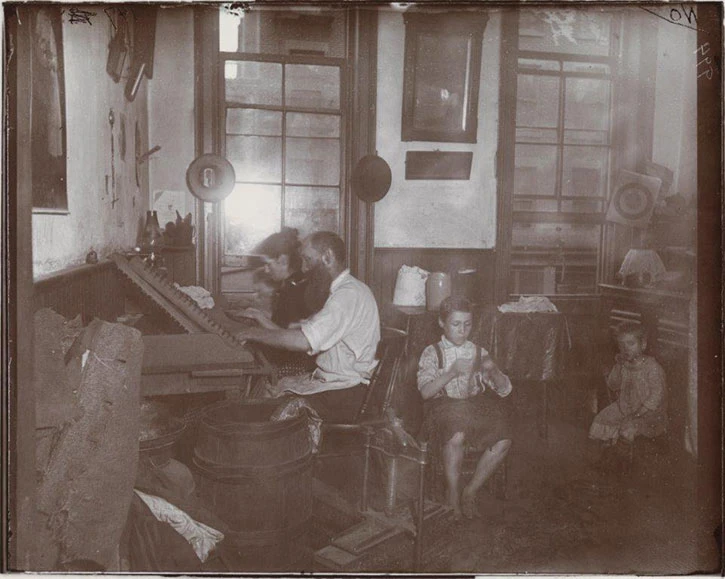
Immigrant parents and children make cigars in their tenement apartment.
Jacob Riis, Bohemian Cigar Makers at Work, 1889–1890. Piecework brought paid production into the same apartment where a family lived. Library of Congress
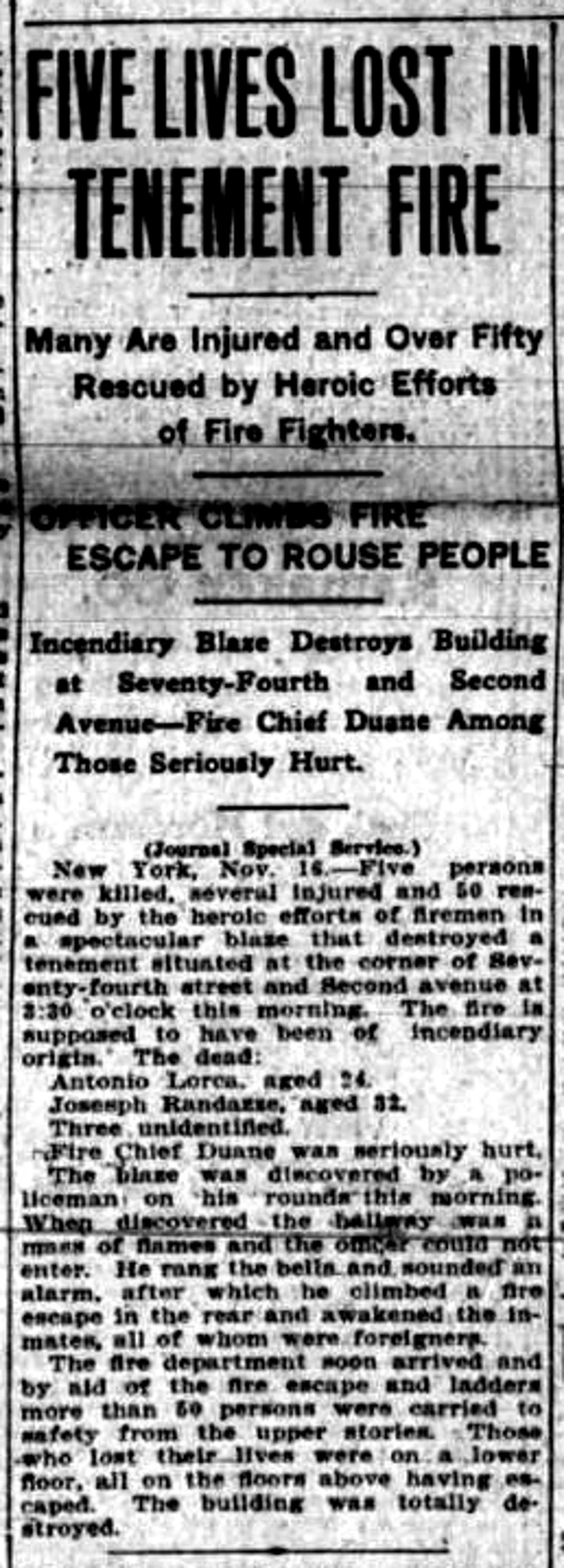
Newspaper headline Five Lives Lost in Tenement Fire
“Five Lives Lost in Tenement Fire,” Oregon Daily Journal, November 16, 1905. This New York report describes five deaths and fifty rescues. Read the newspaperOriginal newspaper

Who deserved help?

Carnegie’s libraries were one form of philanthropy. Charity organizations also tried to help families meet immediate needs such as food, fuel and shelter. Middle-class women played prominent roles as volunteers and visitors. Religious convictions, especially among Protestant reformers, encouraged many to treat helping their neighbors as a moral duty.

That duty could come with judgments about the recipient. Some organizations investigated homes, drinking, spending and willingness to work before deciding who was “deserving.” Beliefs that poverty revealed personal weakness overlapped with Social Darwinism’s explanation of inequality. Religious charity also inspired reformers who challenged harsh conditions and insisted that communities owed poor families help. Charity workers held different views about what caused poverty.

A visit could bring food and useful support. It could also put a family’s private choices under a stranger’s supervision. A family that reached the middle class might give money or volunteer—and face the same question as Carnegie: who decides what another family needs?

  1. Imagine Lester’s family needs emergency coal. What might a ward boss ask in return? What might a charity investigator want to know before helping?
  2. Samuel can now afford to donate. What would change if he funded emergency food, a library, or a campaign for safer housing? Who would decide how each gift was used?

Best Guess definitions DO NOT LOOK THEM UP:

Corruption
Political machine
Ward boss
Graft
Bribe

Charity context · Social Security Administration history · Charity organization societies · Mary Richmond and charity work ·

Workers Unite

A workingman carrying his family climbs a pole coated with Monopoly Grease toward higher wages.
Joseph Keppler, First Annual Picnic of the Knights of Labor, Puck, June 21, 1882. Library of Congress
  1. Look again at the workingman and his family. What could several workers accomplish together that he cannot accomplish on his own?
  2. What demand would change the climb itself? What could the men watching do to prevent that change?

What could workers change together?

Industrial growth created fortunes and made many goods cheaper, but a worker’s wages still had to cover rent, food and the cost of staying healthy. Long shifts and unsafe machinery could make earning a living dangerous. Immigrants, women and minority workers often faced additional discrimination. These are the conditions that made organizing attractive.

A labor union brought workers together to pursue shared demands. Collective bargaining meant negotiating as a group with an employer over wages, hours and working conditions. An individual who refused an offer could be replaced. Workers hoped that acting together would make their demands harder to dismiss.

A strike withheld labor to put pressure on the employer. It also stopped strikers’ wages. A lockout reversed who closed the door: the employer kept workers off the job to pressure them to accept terms. Employers could hire strikebreakers to do the work of those on strike. A replacement worker might need wages as badly as the striker did.

The Knights of Labor sought a broad membership of skilled and unskilled workers, including women and African Americans, although its claim to solidarity had limits, including exclusion of Chinese workers. It used bargaining and boycotts as well as the threat of strikes. After Haymarket and a series of unsuccessful strikes, its influence declined.

Samuel Gompers’s American Federation of Labor organized skilled trades and concentrated on practical gains in pay, hours and conditions. Membership dues helped build strike funds. Those funds mattered because a union needed to feed families while workers withheld their labor. Employers, police, courts and the public could all affect how long either side held out.

Adapted from Topic 2, Section 3, The Organized Labor Movement, textbook pp. 113–118. Haymarket chronology checked against Chicago History Museum.

Chicago, May 1886

May 1, 1886 · Eight hours

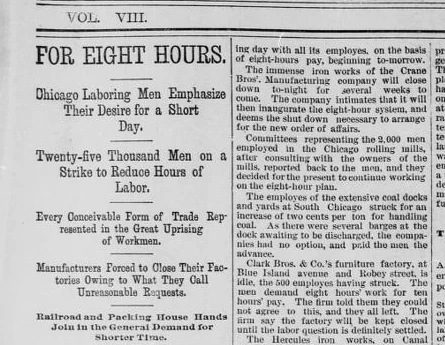
Workers across the country struck and demonstrated for an eight-hour workday. Chicago became a major center of the movement.

The St. Paul Daily Globe, May 1, 1886. The front-page headline announces ‘For Eight Hours.’
The St. Paul Daily Globe, May 1, 1886. The front-page headline announces ‘For Eight Hours.’ Source
  1. What demand leads this headline? What might an eight-hour day change for a household in our simulation?

May 3, 1886 · Police fire at McCormick

Police fired during a clash with strikers at Chicago’s McCormick reaper factory, killing at least two workers. Anarchist organizers called a protest meeting for the next evening.

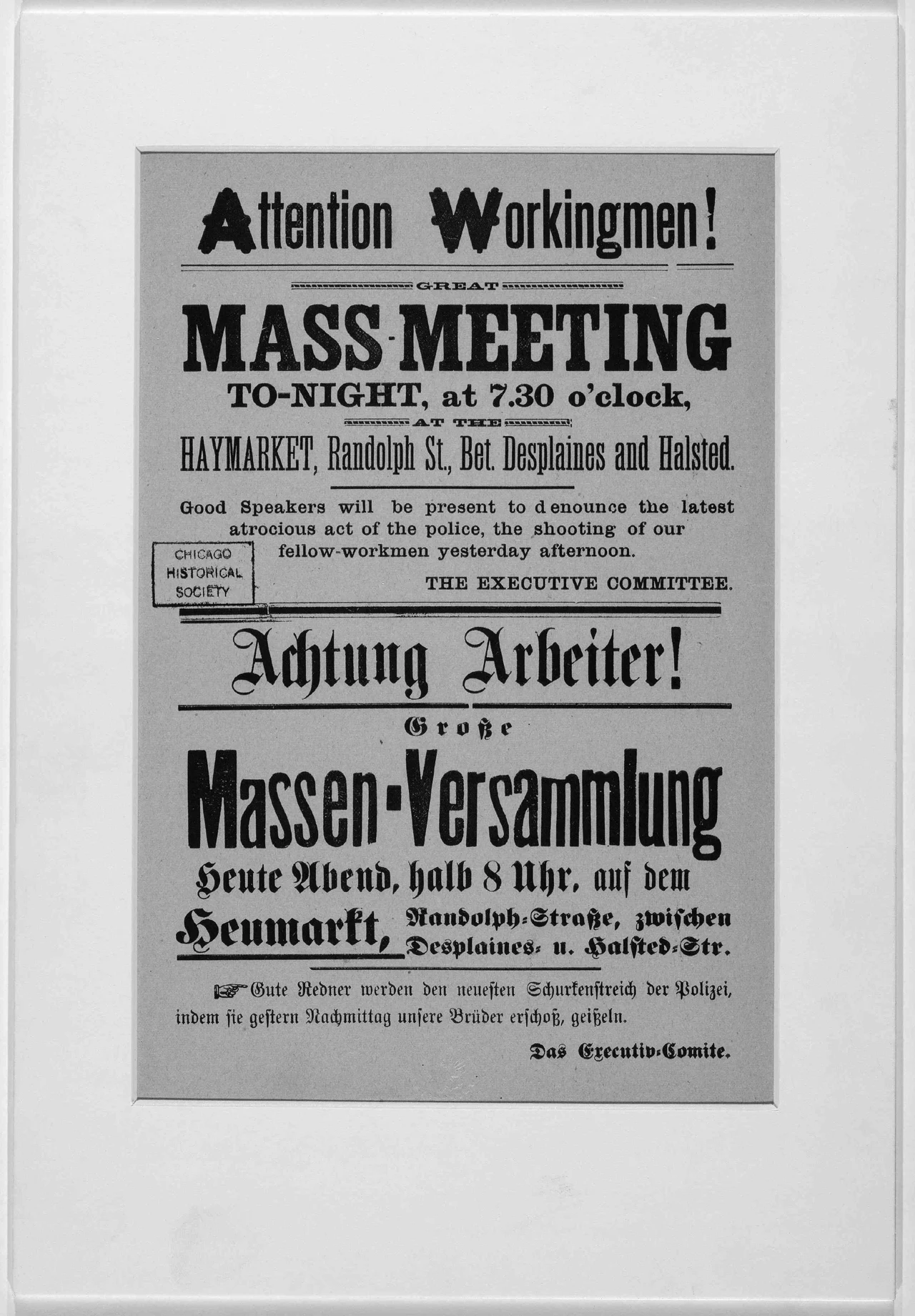
Bilingual notice of a mass meeting at Haymarket.
Mass meeting notice, May 4, 1886. English and German invite workers to protest police violence. Source
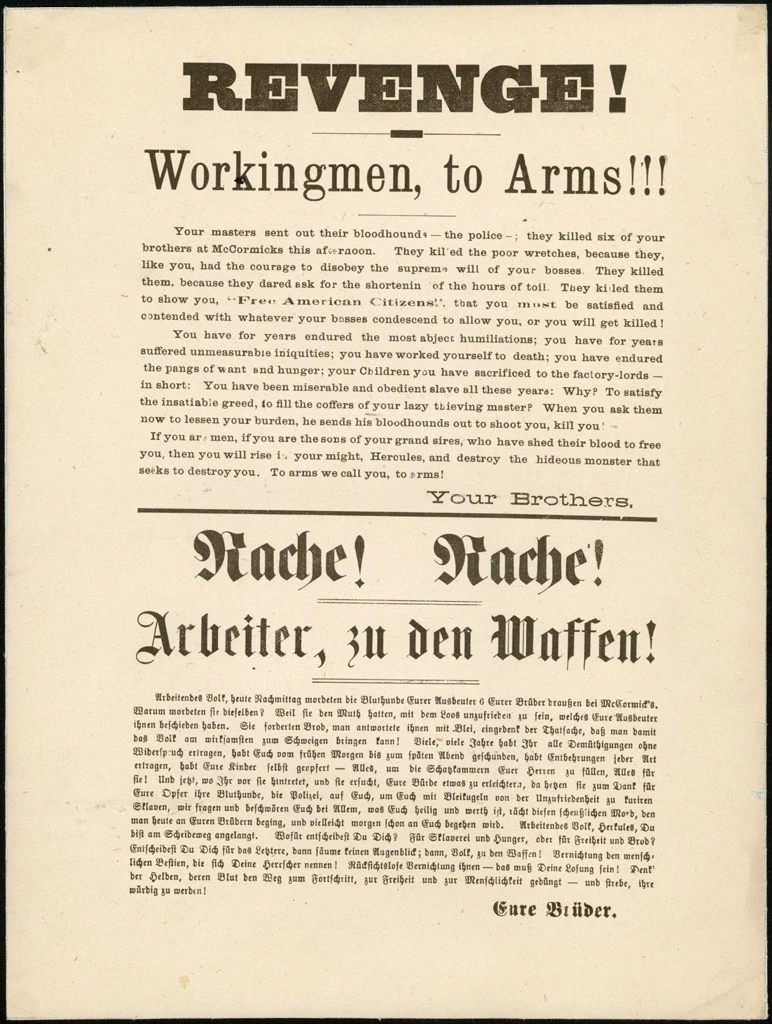
A circular headed Revenge! Workingmen to Arms!!!
‘Revenge! Workingmen, to Arms!!!’ Bilingual circular, Chicago, May 1886. The leaflet claims six were killed. Its number is a contemporary claim, not a confirmed count. Source
  1. What response does this leaflet ask for? Compare its language with the mass-meeting notice.
  2. Why print both notices in English and German? Compare the action each asks workers to take.

May 4, 1886 · A meeting becomes a bombing

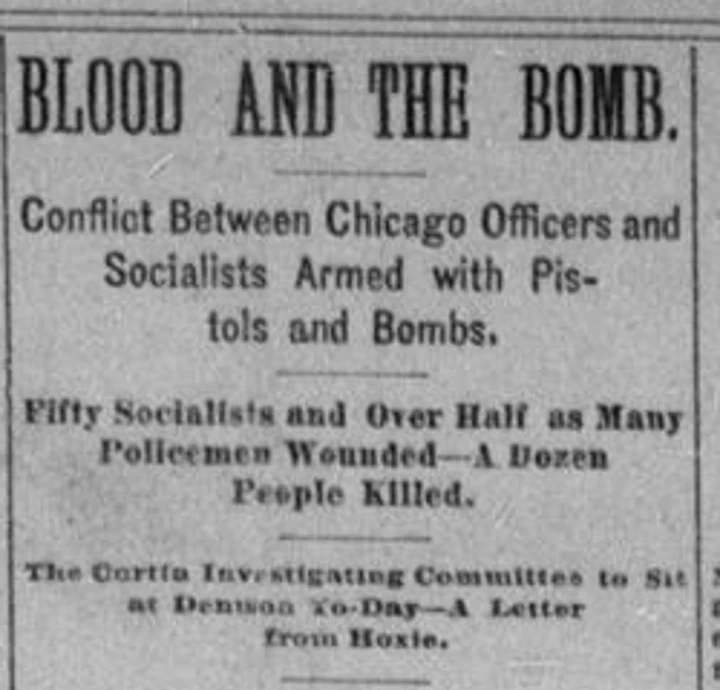
The Haymarket meeting began peacefully. As police moved to disperse it, someone threw a bomb. Gunfire followed. Police officers and civilians died. The bomber’s identity has never been established with certainty.

The Fort Worth Daily Gazette, May 5, 1886, reports the violence under ‘Blood and the Bomb.’
The Fort Worth Daily Gazette, May 5, 1886, reports the violence under ‘Blood and the Bomb.’ Source
  1. What does this headline make the reader notice first? What happens to the original demand for shorter hours?

1886–1893 · The struggle over blame

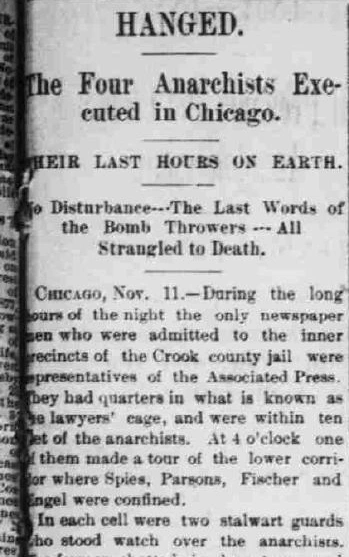
Eight anarchists were convicted. Four were executed in November 1887. In 1893 Illinois governor John Peter Altgeld pardoned the three still in prison. Public association of unions with violence damaged organizing.

HANGED. The Four Anarchists Executed in Chicago. Their Last Hours on Earth.
“Hanged. The Four Anarchists Executed in Chicago.” Oregon Statesman, November 18, 1887, p. 3. Original newspaper
  1. Compare “For Eight Hours,” “Blood and the Bomb,” and “The Four Anarchists Executed.” How has the focus changed? How could these reports affect a reader’s view of labor unions?

Chronology · Chicago History Museum

Working definitions of:

Labor union
Collective bargaining
Strike
Lockout
Strikebreakers